Saturday, June 24, 2017

Exciting Tours at the Sustainability Demonstration Center!

Are you or anyone you know looking for something fun, authentic, and exciting to do in the Monteverde region?! Want to choose an activity that directly supports the local community and environmental conservation? Want to immerse yourself in nature enjoying both forest and river?

Head over to the Sustainability Demonstration Center, located right along Route 606, the main road towards Monteverde! 

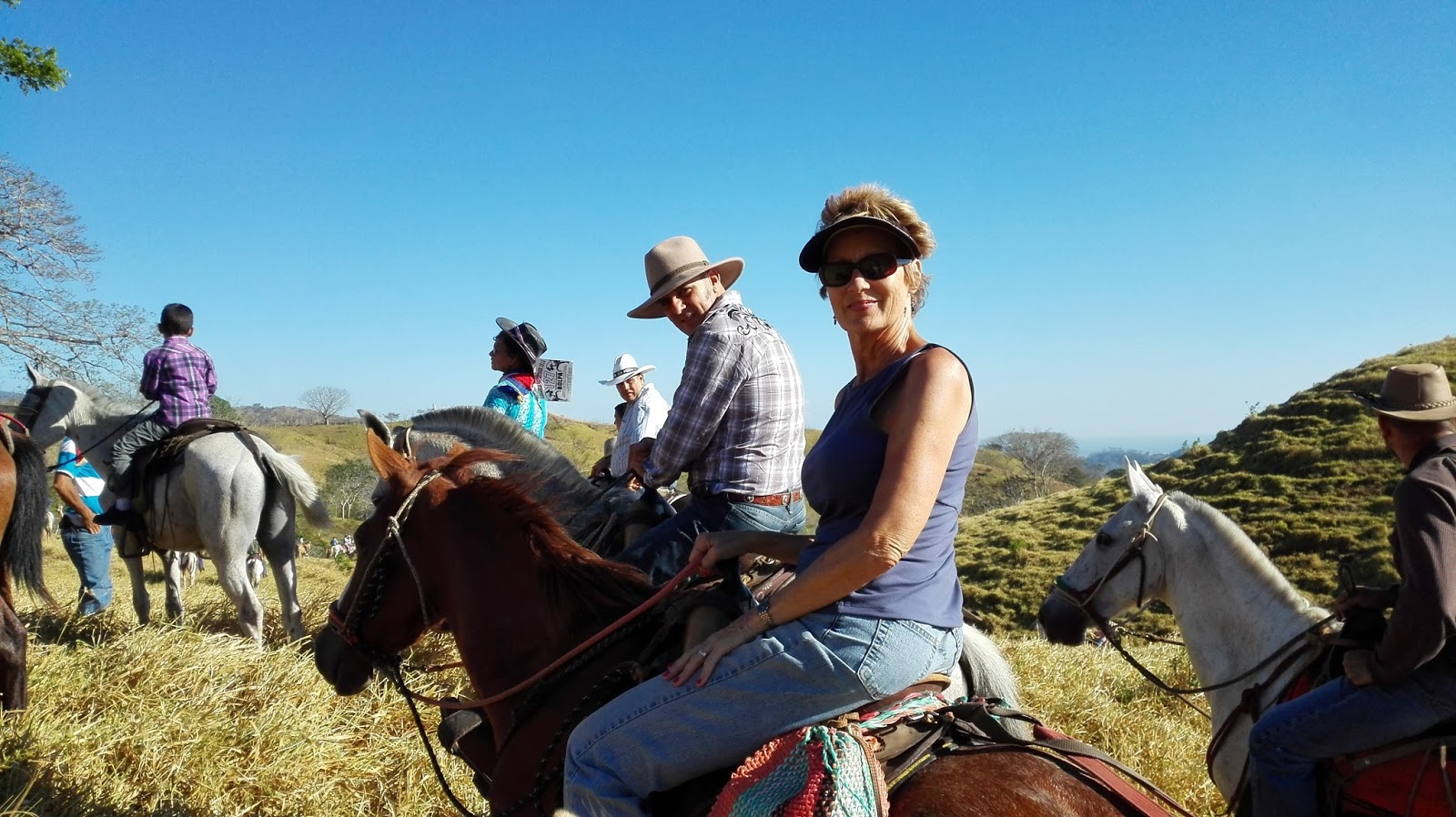
If you're planning a visit to Monteverde, make sure you stop by and spend some time with us. Whether it's so you can stretch your legs, eat and take a swim while on your journey to Monteverde (especially great if you have children with you) or just escape the busy tourist hot-spots and enjoy some peaceful time in nature, we have so many wonderful activities for you to enjoy such as hiking, bird-watching, refreshing swims in the river, horseback riding, a zip-line for children, traditional outdoor games, tour of the historic center and animal welfare program, and more!  


While we welcome you to just stop by, we also offer themed tours at the Sustainability Demonstration Center. Choose one or create a whole day of fun by combining two half-day tours! 

TOUR SCHEDULE: 

Each tour is 2 hours and can be provided in either English or Spanish. We offer a morning tour from 9:00 am – 11:00 am and an afternoon tour from 1:00 pm – 3:00 pm. If the tour is arranged ahead of time, we can adjust the hours of the tour. Reservations are necessary.

CONTACT US AT sdccostarica@gmail.com or +506-8302-2522 for more information or to make your reservation! Get ready to have some fun!


100% Natural Tour

Literally submerge yourself in a totally joyful and natural experience in a pristine river and the true rural Costa Rica. Learn about what lies behind the decline of the most important economic center of the entire region, the old gold mines, trade route, and find out why the locals say there are ghosts around.

Visit our tree nursery which houses thousands of trees given away for free to promote reforestation, enjoy the traditional games outdoors and learn about wildlife rehab and animal welfare efforts. Walk across a river and end up at a 112-acre integrated farm to watch the water buffaloes and many fruit trees and other crops and get served a fruit-based drink and snack. The beautiful Guacimal River offers swimming holes deep enough to swim and jump off the rocks plus the shallow Jacuzzi-like areas to get a natural massage- a favorite!  

The 100% Natural Tour includes:
·       Tour of the historic Sustainability Demonstration Center
·       Visit the native tree nursery
·       Learn about the wildlife rehabilitation and animal welfare programs
·       Enjoy traditional Costa Rican outdoor games
·       Hike across a river to visit a 112-acre integrated farm
·       Natural fruit drink and delicious snack
·       Swim in natural swimming holes in the Guacimal River

Cost:
$40 USD per adult, $25 USD per child
Includes guided tour, activities, and snack


Horseback Riding

Start by a brief tour of the historic Casona, then cross a gentle river and go through what used to be an ancient trade route, a forested path that takes you to an integrated farm where you see farm animals and water buffaloes, organic crops and fruit trees, then go to the mountain top with wonderful views of the Gulf of Nicoya. Then off to the pristine river pools to swim and where you can often watch tropical birds, monkeys, iguanas sunning themselves on a large river rock or a Jesus Christ lizard literally walking on water! Hearing the sound of the water cascading over the beautiful rocks and feeling the cool water over your skin is an exquisite experience that will leave you relaxed and happy…. Getting there on horse-back is idyllic.

During the tour of the historic Casona (Big House), you will find out why the locals say it is haunted and what lies behind the collapse of what once was the most important economic center of the entire region. Upon return, enjoy refreshments from our farm…you will have a memorable experience and a happy heart, as you will have supported a rural non-profit organization.

The Horseback Riding includes:
·       Relaxing horseback riding tour through a 112-acre integrated farm with beautiful mountain views of the Gulf of Nicoya
·       Visit to a natural swimming hole to enjoy a refreshing swim
·       Tour of the historic Sustainability Demonstration Center
·       Natural fruit drink and delicious snack

Cost:
$40 USD per person (same for adults & children)
Includes horseback riding, activities, and snack

Please help us to spread the word! 

Sunday, June 11, 2017

Co-creating a New Reality


Yesterday morning I spent a few hours with a professor from the University of Costa Rica named Gloriana going over many aspects of the Center.  The evening prior, we had both attended a forum regarding the water issues in Puntarenas City.  These included the threat to a fragile wetland by the construction of a GAS STATION.  We thought about how the Communications and Radio class she is teaching here at the Center could organize to help Puntarenas City.  There is also a volunteer named JJ who is coming to do a short documentary for the Center and we thought of inviting him to help Puntarenas too.

The early afternoon was dedicated to organizing a talk that will be given here by Michiko Hayashi, who is coming to speak about the famous work on water consciousness of Dr. Emoto, a prominent scientist from Japan who transitioned in 2014.  We are so grateful to my friend Mary Newswanger who worked very hard to bring Michiko to Costa Rica.

Later in the eve there was a downpour, and people were calling the Center to see if the workshop called Community Consulting was on.  A few minutes before 5:00 p.m. and nobody had arrived.  The professor from the University of Costa Rica in Puntarenas showed up with her assistant, a little concerned about the apparent lack of participants. But we went ahead and set up the large screen, moved tables and chairs, got the materials out, etc.  Preparing as if people were going to come…and they did, a little late and a little wet.  The workshop spun into all kinds of discussions, as we all knew one another well… we have been marching on the streets together, we have shared meals at our own market, we have organized to help other communities, etc.  At the end, the project that we as a group decided to work on was this: Helping young couples with children with Effective Communication, Dealing with Emotions and Parenting.  It was decided that the workshops should be given in Guacimal, but also in a nearby very impoverished community called Colina, which suffers from all the ills that extreme poverty has to offer.  I gave the professor the contact info for Colina and left that group.  We were thrilled this Community Consulting Program of the University of Costa Rica can do this kind of work!

As I removed myself from the Events Room into our dining area, I saw my husband with our French friend Patricio in a very animated conversation in preparation for opening what we consider the last point in the triangle, the trinity, that we had envisioned long time ago... a permanent store to have products that are produced in small farms in Costa Rica, in a fair way, without chemicals and going with the natural cycles for each crop. 


Chumi, a friend and environmentalist from a nearby community came by.  He produces and sells honey and came to discuss his having a stand at the new store which we will call Cosas Buenas Market.  The store will open up soon and we are excited to see what people think of our home-made ice cream and bakery using ingredients from small farms and fruit from our trees, in addition to the crafts, grains, produce and many other things that will have a benefit for all involved.


Gloriana, the professor from the UCR who has been teaching a workshop on Communication and Radio came back and met up with the professors that were already here and became part of the discussion to help Colina.  The new professor, Marieta, must have said goodbye several times.  She said, “I keep saying goodbye and I don’t leave.  One feels so good here and never wants to leave.” I said, “It must be because we don’t want you to leave either."

We live at the Center, so at the end, we went to bed late. Our Events Room was all in disarray and our kitchen area was the same, but our hearts were filled with so much joy.  The Center is fulfilling its Mission and our Vision for it.  It waited asleep and shut down for over three decades to do this.  And as we have struggled to keep it afloat financially, we tell ourselves, “the Center itself must be very happy to be serving.  Therefore, IT will help us move all the necessary elements to do so.” 

And then we rolled over into a deep and satisfied asleep, knowing every day of our lives is filled with infinite possibilities to help and grow, to fulfill dreams, to co-create a new reality.  There is no greater payment for our work than days like this.


Monday, May 29, 2017

No to Agrochemicals, Yes to Community Health!

 At the Sustainability Demonstration Center, we promote the healthy production, distribution, and consumption of food, promoting activities that foster a microeconomy that supports healthy, local food production, where we can produce and consume food that is healthy for us, our families, and the environment. Instead of using agrochemicals and planting monocultures, we have a polyculture farm on our ranch where we take into account the health of the land, water, and people. 

 Unfortunately, in Costa Rica, there is a high use of agrochemicals, especially in large, monoculture pineapple plantations. Since education is an important pillar of sustainability, sharing information so that everyone can be an informed consumer is key. This is a list of agrochemicals, both legal and reported, that pineapple plantations in Costa Rica use: 

Herbicides:
1) ametryne
2) bromacil
3) diuron
4) paraquat

Insecticides:
5) diazinon
6) etoprofos
7) carbaryl
Growth regulators:
8) etephon

Fungicides:
9) fosetyl
10) triadimefon 
11) triadimefon 
12) mancozeb
13) metalaxyl


 By sharing knowledge and promoting the healthy production and distribution of food, we CAN take steps as aware and knowledgeable consumers about what we choose to support and what we choose to eat. For more information about the use of agrochemicals in Costa Rica, please check out this link to an article: http://www.ticotimes.net/2015/06/07/costa-rica-consumes-agrochemicals-per-hectare-country-world

Here in Guacimal, we are not only encouraging production of organic food products, we are also fostering a microeconomy that allows people to invest in the community, rather than large, multinational corporations that pollute the land, water, and health of people with agrochemicals. Our Saturday Farmer's Market is a great place to visit and for you to enjoy local, traditional Costa Rican foods and traditional marimba music! Please stop by if you are in the area!

Wednesday, May 17, 2017

REDD+ Means Red Alert!

I love students… and the students from the California University System who visited the Center recently, sparked conversations about many topics… too many to mention.  But I want to write about one in particular.  Because it became apparent that REDD+ is being “sold” to them as this grand idea to offset deforestation and pollution.   It is an absurd idea and we must question it and do all we can to help protect the territories of the indigenous people.  The BriBri have put together an informative booklet which I summarized below.

Translated and Adapted from:  "Cuidando la Madre Tierra:  Luchando contra REDD+ y megaproyectos"   (Taking Care of Mother Earth:  Fighting Against REDD+ and Megaprojects)

What is REDD+?

It means Reduction of Emissions Due to Deforestation and Degradation of the Forests.  The + symbol refers to a Sustainable Handling, Conservation and an Increase of Carbon reserves.

It is a project that allows extractive industries (corporations and governments) pay for permits that allow them to pollute.  The contract that the leaders of an indigenous community sign to accept REDD+ in its territory, means that the community no longer can use its forest or most of it, because there are companies that are paying so the trees in their forests clean the pollution caused by the industry. 

The project was created by international entities such as the World Bank and United Nations, and it started in Costa Rica in 2008.

They reject REDD+ because corporations need to be responsible for their own pollution and they need to stop their extractive, polluting industries; to pay in order to pollute is a lack of respect.

They reject REDD+ because the process of consultation that the government keeps pushing since 8 years ago is not done with good intention as it does not provide timely and true information to the indigenous communities involved.  They obtain the cooperation If the local government against the will of the people.  If the local BRIBRI government signs such a contract, the usable area of forest the indigenous community would have left to use would be reduced to 2%.

Since 2010, the community has been against this project and has been protesting and they even went to the Presidential Home in San Jose.

They have used the media, held forums, visited communities; they have had numerous meetings with the local government ADITIBRI who are not listening to the people, and have received visitors from various countries that want to help them stop REDD+.

They worked on a Declaration to protect their indigenous BRIBRI territory and used the United Nations Declaration regarding Indigenous Peoples.  The main point in this Declaration is that indigenous people have the right to self-determination and self-governance.

Indigenous people have been living in balance and harmony with their environment, a true and ancestral model of Sustainability.  They do not need REDD+.  And in fact, REDD+ would upset this delicate balance.


Please tell others about what REDD+ really means!

Tuesday, May 2, 2017

Community Outreach Programs at the Sustainability Demonstration Center

We promote a wide range of different community outreach programs here at the Sustainability Demonstration Center, from economic empowerment to environmental protection, from animal welfare to educational programs for both children and adults.


Guests who stay at the Center itself or at one of the rental cabins directly support the initiatives at the Center and the community. If you are interested in visiting and staying with us, please let us know!


For more information about the Sustainability Demonstration Center, check out our website: sustainablecostarica.org

COMMUNITY OUTREACH PROGRAMS AT THE SUSTAINABILITY DEMONSTRATION CENTER!

ENVIRONMENTAL PROTECTION


Native Tree Nursery: The Center houses a tree nursery of over 6,000 trees in conjunction with the Costa Rican Conservation Foundation. These trees are given away freely primarily for reforestation efforts around water recharge areas, but also to anyone who wants to restore areas voided of trees.

Collaborative Efforts: The Center collaborates with other organizations such as national and international universities, in particular Environmental Kiosks of the University of Costa Rica and Lynchburg College.


Supporting Research: The Center provides free lodging to researchers who come to contribute pro bono to river protection.

Traditional Sugar Mill: Our traditional sugar mill is made available to the locals to promote the planting and processing of local and organic sugar and reduce the consumption of one of the most environmentally damaging crops in Costa Rica. We often coordinate this sugar cane milling with tourist groups.

Local Newspaper: The Center is a co-editor and writes a large portion of the local newspaper and often funds its printing.  The newspaper contains information to help protect the environment.


Sustainable Agriculture: We also are trying out different crops that are more sustainable than the cattle industry or other harmful crops such as pineapple and bananas.

Upcycling Projects: Children often receive classes on recycling and other now the University of Costa Rica students who work with us have an edible garden project that they are creating using car tires and recycled wood

Alliance for the Defense of Water: The Center has been co-founder and faithful supporter of the Alliance for the Defense of Water in Puntarenas Province and continues to promote action through this informal organization of more than 20 rural communities

ANIMAL WELFARE


Spay and Neuter Clinics: The Center continues the spay and neuter clinics that its founders began in Monteverde in 2008, thanks to the vet who makes the effort to travel down to make it possible!

Wildlife Rehabilitation: The locals often bring more than domestic animals, which is why we are now working with the national entity in charge of wildlife (SINAC) to rehabilitate the animals that we can and release them and keep the ones that cannot be safely released.


 Healthy Meat Production: Current global meat production methods are often very cruel. The Center uses its 112-acre organic farm to try out different ways to raise animals for meat in a healthy and kind way.

ECONOMIC EMPOWERMENT & THE PROMOTION OF ENTREPRENEURSHIP


Weekly Farmer’s Market: The Center provides free space and pays for utilities and patent fees for anyone in the community or surrounding communities who wishes to come and sell their products and food at the Farmer’s Market every Saturday.

Farm-to-Table Meals: We coordinate with women from the community to make meals and provide other services such as massages or cooking classes for our guests. When the guests arrive, the women deal directly with the guests and earn 100% of the sale.


Local Organic Foods: We promote organic agriculture and the sale of local products such as eggs, cheese, tortillas, free range chickens, etc. by providing a list to the cabin guests prior to arrival. 100% of the sale goes to the local seller. The Center promotes community-based rural tourism.

Support of Local Artists: We allow local artists to sell their artwork in the main historic building of the Center, which is visited by many tourists and we do not charge any commission.

EDUCATION & CULTURAL DEVELOPMENT


Community Classes & Workshops: The Center opens its doors freely to any entity or individual who offers free classes or workshops to the community.  We work with the University of Costa Rica (Kioscos Socioambientales), the National Institute for Learning, Hands without Borders, National University, and many others, so that almost every week, the community receives a class or the occasional treat of a play or a movie. Classes range from how to prevent and treat plagues in honeybees and how to prevent depredation of cattle by large felines to English as a Second Language and art classes for adults and children. Often, the Center gives the teachers or students free lodging in exchange for their work.

Lending Library: We have a small lending public library that is maintained by book donations.

Personal Improvement Classes: We hold weekly Personal Improvement classes.  This is geared towards minimizing issues such as domestic violence and substance abuse.  We have not been successful in starting an AA group, but it is one of our goals as substance abuse is a problem.

RECREATION


Recreation for Children: The first park of its kind is housed at the Center. Local children come freely to enjoy the traditional games of stilts, mechanical bull (actually moved by ropes, not electricity), slippery pole, and a mini-zipline, along with the wide open area to safely run and play. They enjoy mingling with the farm animals, the emu, donkeys and learn about wildlife rehab from our rescued animals. As they splash around in the nearby river, they learn about conservation.

Free Dance Classes: A community member gives free typical dance classes are held for children weekly at another one of our facilities and salsa classes are on occasion given at the Farmer’s Market where tourist and locals alike enjoy themselves and learn to dance!

COMMUNITY ORGANIZATION & SUPPORT

Community Association: The Center is helping the community to create a non-profit association in order for the community to receive funding for projects that enable the citizens to earn a living in harmony with the environment and to promote cultural development.

River Protection: Since 2011, the community has been protesting large corporations trying to take the water from the pristine Veracruz River. The Center has been very involved in supporting the locals in this endeavor, which entails coordination with national and international institutions, writing letters and emails, traveling, protesting along with locals on the streets in Puntarenas and San Jose, advocating for those who have been affected legally, contacting the media and much more.

Social Services: The Center is housed in a large historic building that was used as the equivalent of a modern mall, but was had been shut down for over 35 years.  It has become much more than a place for the locals to have meetings; they also receive classes, workshops, and interact with all our visitors. Locals look to the Center for help with letters, advocacy, and advice on all sorts of topics.

In addition to these community outreach programs, we are also running a Nature and Cultural Immersion Day Camp this July (sign up for 1 to 4 weeks) and opening up 3 different volunteer positions (with free lodging)! If you know of anyone who would be interested, please pass the information along and help us spread the word.

Are you interested in joining our efforts? Write to us at monteverdecc@gmail.com or give us a call (8302-2522)! We look forward to hearing from you!

Monday, April 10, 2017

Community Service Students Making a Difference!


We have had wonderful participation from community service students from the University of Costa Rica (UCR) at the Sustainability Demonstration Center. They have been making a difference as community leaders to protect natural resources and sustainable community development! We have had students from different programs of the UCR come and lead talks and workshops with local children and adults, as well as learn and enjoy the river and local community initiatives.

We had some community service students working in the food industry come to help with the development of proper packaging and labeling of food products and teach about the steps to the commercialization of local products. They gave talks that promote the use of seasonal fruits like cashew apples and great information for local entrepreneurs.

We also had students from the Environmental Kiosks program give workshops with children about deforestation and impacts of forest degradation. Education is such an important part of initiating sustainable change and working with children is key. With university students teaching local children, you truly experience the power of learning through teaching!

The communications class led by the UCR also continues, strengthening sustainable community development in Guacimal. Locals have been working on developing their own radio programs - very exciting!

SACO, a program of the UCR, serves as a bridge between academic knowledge and farmers. This is a leadership program that supports the formation and personal development of community leaders to protect natural resources, as well as develop efficient systems of land and resource use. For example, there is active exploration and discussion of how agreements done at a governmental level affect life on a daily basis.


We are thrilled that we have so many inspiring, enthusiastic students from the UCR working with us at the Sustainability Demonstration Center to promote and strengthen local community initiatives. Thank you for all that you do!


Tuesday, April 4, 2017

Agroecological Day Trip to the Sustainability Demonstration Center


On a beautiful weekend during March, we had the opportunity to host an interactive Agroecological Day Trip (“Paseo Agroecológico”), organized by Juan Arriaga from Casa del Sol in Guanacaste, at the Sustainability Demonstration Center. It was an empowering series of interactions between people with different backgrounds and expertise. This trip was part of other fair trade and sustainability visits we’ve had at the Center and our organic farm. The entire “paseo” was a continuous exchange of information between over 40 people from different regions of Costa Rica, from topics including adaptation strategies to climate change by using different groups to analysis of economic and political changes and impacts on small farmers and more.

We had great participation from small farmers, as well as Iris Rodriguez, who runs one of the few Seed Banks in Costa Rica. She has a storage-house in Atenas that allows her to preserve a diversity of seeds that have a wide range of uses, such as natural pesticides, incense, and also nutritional source. There was a seed exchange among participants and discussion about how we can grow different foods, especially in anticipation of the globalization of genetically modified organisms (GMOs) and the harmful pesticide, RoundUp that accompanies GMO crops.


We also visited a local artist's Hobbit-style gallery... what an amazing person!  He is one example of what one person can do to help his community.  He volunteers at many community-based organizations, including the Feria de Guacimal and the City Water Council.


And, yes, a swim in the river was also in order, followed by great food from the local women at Farmer's Market.


At the Farmer's market, Jaime Garcia, representing two Costa Rican universities (UCR and UNED), spoke about agrochemicals and pesticides and their widespread impacts on our health and the health of our planet.  Many passerby even stayed to hear the important information Dr. Garcia shared.

Empowered by the knowledge that each person could share and also inspired by the messages and information from other people, it was a wonderful weekend. It became clear that it is up to the people to take charge and steer the boat, as often, governments are the ones facilitating world destruction. This type of action begins with each individual, making sure we make healthy decisions that allow us to take care of ourselves, those around us, and with that, the rest of the planet. Sharing INFORMATION is KEY.